High blood pressure: trained laypeople improve healthcare in rural Africa
- Bild-Infos
- Download
Basel (ots)
In rural regions of Africa, high blood pressure often goes untreated because health centres are far away and there is a shortage of health professionals. A study by the University of Basel and SolidarMed in Lesotho shows that, with the help of a tablet app, villagers who have received training achieve better blood pressure control in their village community compared to normal treatment in healthcare facilities. The results provide the first robust data for an approach that could significantly improve access to blood pressure treatment in underserved regions.
High blood pressure is one of the leading causes of heart attacks and strokes worldwide. In many low- and middle-income countries, a large proportion of those affected remain untreated. Access to treatment for high blood pressure is severely restricted due to insufficient medical care, especially in remote areas. This includes the small mountainous state of Lesotho in southern Africa.
Having specially trained laypeople take on medical tasks is seen as a promising approach, but there have been no reliable studies on the treatment of high blood pressure until now. A research team from the University of Basel, led by Professor Niklaus Labhardt and Dr Alain Amstutz, has now examined this together with SolidarMed, the Lesotho Ministry of Health and the National University of Lesotho. The results will be published in Nature Medicine.
Tablet app guides laypeople through the treatment
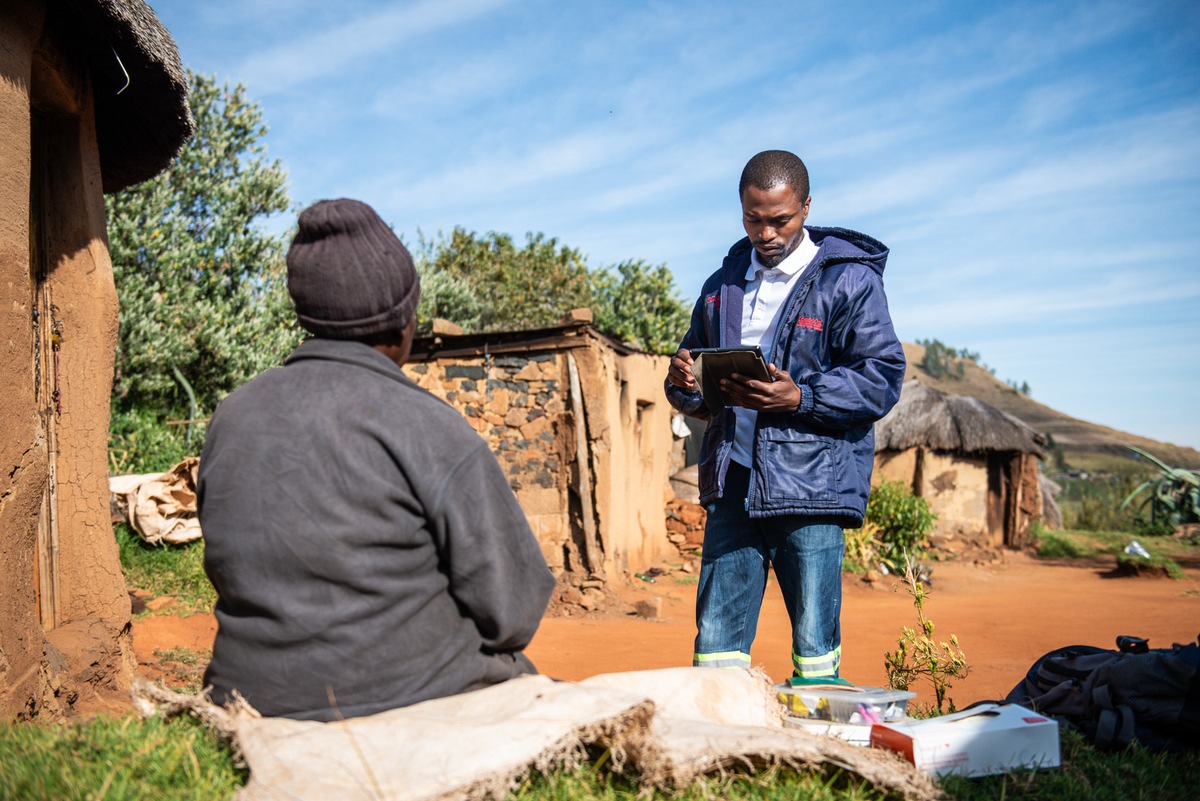
As part of the study, 103 trained laypeople tested more than 6,600 people for high blood pressure in their villages over a period of five months. They identified more than 1,200 people with high blood pressure, of whom more than 500 had medically problematic levels. Around half of the patients identified with high blood pressure subsequently received antihypertensive therapy prescribed by lay health workers in accordance with clear protocols and with digital decision-making support.
A tablet-based clinical decision-making app supported the lay health workers in the study with adjusting the medication dose of the antihypertensive medications amlodipine and hydrochlorothiazide for each patient according to clear guidelines. Over the following weeks, they optimally adjusted the therapy at regular check-ups. Patients with high blood pressure in the control group received treatment from health professionals in healthcare facilities as usual.
On the whole, the care provided by lay health workers achieved better outcomes than the usual treatment in healthcare facilities. At the same time, the researchers found no relevant differences in serious side effects or complications between the two groups. The layperson-assisted model was therefore just as safe as the usual treatment. The study shows that the layperson-assisted model can work better in remote regions than standard care in often distant healthcare facilities.'
After two weeks of training, lay health workers from the village with digital support are ideally placed to care for people with high blood pressure,' says co-leader of the study Professor Niklaus Labhardt from the University of Basel. 'This can significantly improve the treatment situation for many blood pressure patients.'
As a next step, the researchers are investigating the cost advantages of this care approach.
Significance for healthcare systems in countries with a shortage of skilled health professionals
The results from Lesotho show how a task-shifting approach can be implemented in practice: lay health workers receive targeted training, are closely supervised and work with clear protocols and digital decision-making support. This allows treatment to be brought closer to people - and relieves the burden on healthcare facilities.
'Every small decrease in blood pressure reduces the risk of a subsequent stroke or heart attack,' says Labhardt. SolidarMed implemented the model together with the health authorities in Lesotho, overseeing training and supervision, and ensuring integration into the existing healthcare system.
'Working with SolidarMed, we've learned that engaging trained community health workers for screening, early diagnosis and follow-up care can reduce hospital admissions and improve access to healthcare for underserved rural communities,' says Dr Lebohang Sao, District Medical Officer in Butha-Buthe, Ministry of Health, Lesotho.
'Trained laypeople are an important part of primary care in many countries,' says Jochen Ehmer, Medical Director of SolidarMed. 'The study shows that, with the right guidelines and digital support, they can also safely assist in the care of chronic diseases such as high blood pressure.'
The study is part of the multi-year research programme Community Based Chronic Care Lesotho (ComBaCaL), an applied research collaboration between Switzerland and Lesotho. ComBaCaL is funded by TRANSFORM, a programme of the Swiss Agency for Development and Cooperation (SDC).
'ComBaCaL provides solid scientific evidence and thus makes a significant contribution to the impact of international collaboration,' says Martina Schmidt, head of SDC research. 'Projects like these are particularly important in the current context of development policy.'
Original publikation
Felix Gerber et. al. (2026). Lay community health worker-led care with mobile decision support for uncontrolled hypertension: a cluster-randomized trial. Nature Medicine. 10.1038/s41591-026-04208-w
https://www.nature.com/articles/s41591-026-04208-w
Images
Images available for free use, including image descriptions
SolidarMed
SolidarMed improves healthcare for more than three million people in rural Africa. The projects are developed in collaboration with local partners and supported by local experts. By strengthening health systems, training health professionals and improving access to disease prevention and treatment, SolidarMed achieves lasting impacts for people and contributes to global health - locally rooted, globally relevant. In 2026, the Zewo-certified Swiss organisation is celebrating its 100th anniversary. www.solidarmed.ch. Niklaus Labhardt has been the honorary president of SolidarMed since 2017.
University of Basel
Founded in 1460, the University of Basel is Switzerland's oldest university. Once a centre of European humanism, it is now an internationally oriented, research-intensive university with a focus on life sciences and medicine. Located in the border triangle of Switzerland, Germany and France, it forms the heart of the region's science and innovation cluster. As a full university, it combines all scientific disciplines in teaching and research. According to international rankings, its achievements place it among the 150 best universities in the world and among the top 15 in the German-speaking world.
Contact:
Sidonie Buck, Kommunikation, SolidarMed, s.buck@solidarmed.ch, Tel. +41 41 310 66 60
Dr Niklaus Labhardt, Clinical Epidemiology, Department of Clinical Research, University Hospital Basel and University of Basel, niklaus.labhardt@usb.ch, Tel. +41 79 870 18 59