ALIPH: Protecting Heritage in a Fractured World
- Bild-Infos
- Download
PRESS RELEASE
ALIPH: Protecting Heritage in a Fractured World
USD 138 million invested in nearly 640 projects in 65 countries since 2018
Paris, France, 1 July 2026 — As ALIPH prepares to mark its 10th anniversary, the ALIPH Foundation Board convened for its 17th meeting in Paris at the Hôtel de Marigny, a French presidential residence. It was chaired by Bariza Khiari, representative of France.
The Board members applauded the scale of ALIPH's work since it was established in Geneva in March 2017. To date, ALIPH has supported and accompanied 640 projects in 65 countries, representing a total investment of USD 138 million. They also praised the Foundation’s approach to respond with agility and neutrality, noting that half the aforementioned funding has been allocated to emergency interventions deployed within hours or days to protect heritage threatened by conflict, the impact of climate change, or natural disasters, including in Sudan, Lebanon, Palestine, Yemen, and Ukraine, where ALIPH recently mobilized an additional USD 200,000 in emergency funding. ALIPH has shown that at the request of the relevant authorities, it can intervene wherever needs arise and where technically feasible. The Foundation has now become an international reference in protecting cultural heritage in times of crisis, as demonstrated by the decision of the Ukrainian authorities to request ALIPH to support the establishment of the Ukraine Cultural Heritage Fund, which is now operational.
The meeting led to the approval of projects that strengthen ALIPH's support for the rehabilitation of Syrian cultural heritage; sites and museums threatened by ongoing conflicts in the Middle East; and by climate change in Africa, Asia, and the Pacific. Since the Board's last meeting in December 2025, ALIPH has launched 52 projects for a total investment of nearly USD 10 million.
Rehabilitating Syrian Heritage: Palmyra, Aleppo, and Dura Europos
To date, ALIPH has committed USD 8 million to protect Syrian heritage through 36 projects; 17 of these were launched in the past year totaling USD 5 million. They have been defined and developed in close cooperation with Syria's Directorate General of Antiquities and Museums (DGAM) and are implemented by local and international NGOs. The objective is not only to restore heritage sites but also to strengthen professional training, generate employment, and foster sustainable development.
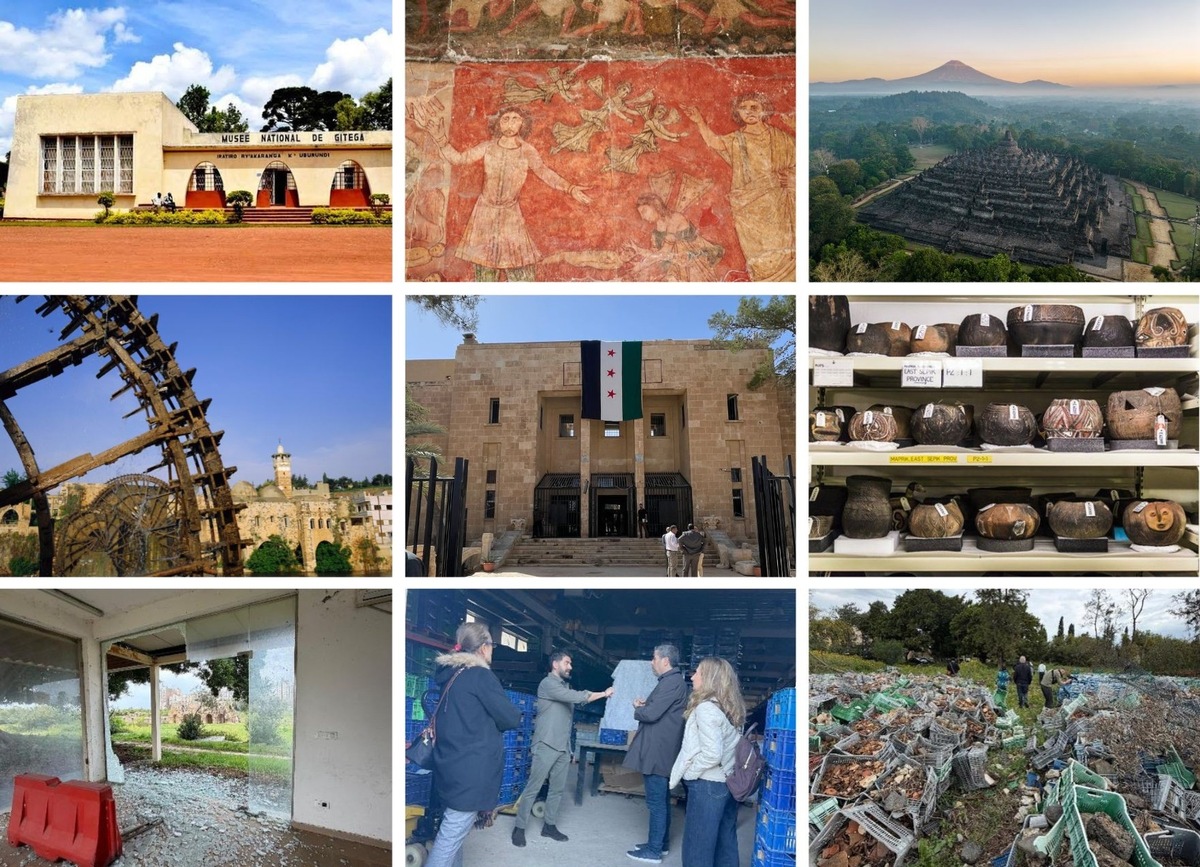
During its meeting, the Foundation also approved an ambitious project to restore the Hall and the extraordinary mural paintings of the Dura Europos Synagogue, housed at the National Museum of Damascus. The project will be implemented by the DGAM, Iconem, the European Institute for Cooperation and Development (IECD), and the French National Heritage Institute (INP), in close collaboration with international experts.
ALIPH is also fully committed to the rehabilitation of the Palmyra Museum and its collections, currently safeguarded at the National Museum of Damascus. Conservation of the artifacts is already underway, alongside the first restoration works on the archaeologists' house and the access bridge to the citadel—essential preparatory work before interventions on the museum and the archaeological site itself. These projects are being carried out by the Saint Ephrem Development Committee (EPDC), IECD, La Guilde, the French National Heritage Institute (INP), and independent Polish experts.
In Aleppo, ALIPH is continuing several major restoration projects in the Old City with the Aga Khan Trust for Culture (AKTC), Turquoise Mountain, and Œuvre d'Orient. These projects address, respectively, the exceptional Al-Halawiyya Madrasa; Khan Al Wazir and an Ottoman house; and a former monastery known as the "House of Wisdom," which will be converted into a health clinic and retirement home.
In the Middle East, emergency interventions and support for heritage professionals
As part of its Middle East Action Plan, adopted earlier this year to address threats facing heritage sites and museums in the region, and backed by an initial allocation of USD 2 million, ALIPH has launched several new initiatives.
First, following renewed hostilities in South Lebanon in early 2026, the Foundation partnered with the Directorate General of Antiquities (DGA) and Œuvre d'Orient to support the protection of the UNESCO World Heritage archaeological site of Tyre. ALIPH is also funding the DGA's efforts to secure the site's inscription on the List of World Heritage in Danger at the next session of the World Heritage Committee, in Busan, Republic of Korea, later this month. The Alliance is also supporting the emergency protection of museum collections in Beirut in partnership with the DGA and the IECD, as well as the digitization of approximately 2,000 artifacts from the Archaeological Museum of the American University of Beirut.
In addition, the Foundation continues to strengthen its support for artisans and the safeguarding of intangible cultural heritage through a new project implemented by the French Institute of Jerusalem and Turquoise Mountain. The initiative will revitalize endangered traditional skills in Palestine, Lebanon, Syria, and Jordan.
Finally, the budget allocated to the Action Plan for the Heritage of Gaza was increased by USD 500,000, bringing the total to USD 2 million. This envelope will allow ALIPH to continue its emergency response to safeguard collections, stabilize monuments, support heritage professionals, and combat the illicit trafficking of cultural property (16 projects have been supported to date).
In the face of climate change, bolstering heritage protection in Asia, Africa, and the Pacific
A major program dedicated to protecting Indonesia's diverse cultural heritage from the impacts of climate change was green lit by the Board. Comprising nine emblematic heritage sites, the initiative is intended to become a model for climate adaptation by addressing a range of heritage materials while integrating diverse local conservation practices. It is being implemented by the French School of Asian Studies (École française d'Extrême-Orient, EFEO) in partnership with Indonesia's Ministry of Culture, universities, and national heritage institutions. At the same time, ALIPH's contribution to the Pasifika Tauhi Emergency Fund, developed in partnership with the Australian Museum Foundation, will enable rapid and flexible assistance to museums and cultural institutions across the Pacific Islands affected by climate change. In Africa, ALIPH will support the rehabilitation of the National Museum of Gitega in Burundi through a project implemented by UNESCO in partnership with the African Heritage School (École du Patrimoine Africain), ICOM Africa, and Burundi's National Commission for UNESCO.
“On the eve of ALIPH's 10th anniversary, our Foundation Board has unanimously reaffirmed its commitment to protecting diverse historical, cultural, and religious heritage threatened by war, climate change, and natural disasters; and responding wherever needs arise and action is possible. Agility, neutrality, and efficacy are part of our DNA. As we prepare to celebrate our 10th anniversary in the United Arab Emirates in early 2027, we are committed to ensuring the long-term sustainability of our organization so that these ambitions endure,” said Bariza Khiari, Chair of ALIPH Foundation Board.
“We are now deeply engaged in Syria, not only because this is one of ALIPH’s core reasons for existing, but also because it is a country where heritage plays a decisive role as one the bonds holding Syrian identity together, as a shared living space, and a driver of sustainable development. It occupies part of the world’s imagination,” said Valéry Freland, Executive Director of ALIPH.
(End)
About ALIPH
The International alliance for the protection of heritage (ALIPH) is the main global fund dedicated to protecting heritage threatened by conflict, crises, climate change, and natural disasters. It supports the people on the ground who take concrete measures to protect or restore museums, sites and monuments, and intangible heritage in the most challenging contexts. ALIPH is a first responder in times of conflict and crisis, providing quick and flexible support within hours or days to prevent heritage from being lost forever. Since its creation in Geneva in 2017, ALIPH has supported 640 projects in 65 countries. The Foundation carries out its mission thanks to the support of its ten member States (United Arab Emirates, Saudi Arabia, Kuwait, Morocco, France, China, Luxembourg, Cyprus, Uzbekistan, and Armenia), its two private members (Dr. Thomas S. Kaplan and the Getty Trust), and about fifteen other donors. ALIPH is committed to supporting professionals, communities, and their legacies to ensure sustainable development and to build peace.
Website – LinkedIn – Bluesky – X – Instagram – Facebook – YouTube
Bates Assilbekova
Media Relations Officer