Opening Tomorrow: Beyond the Manosphere. Masculinities Today
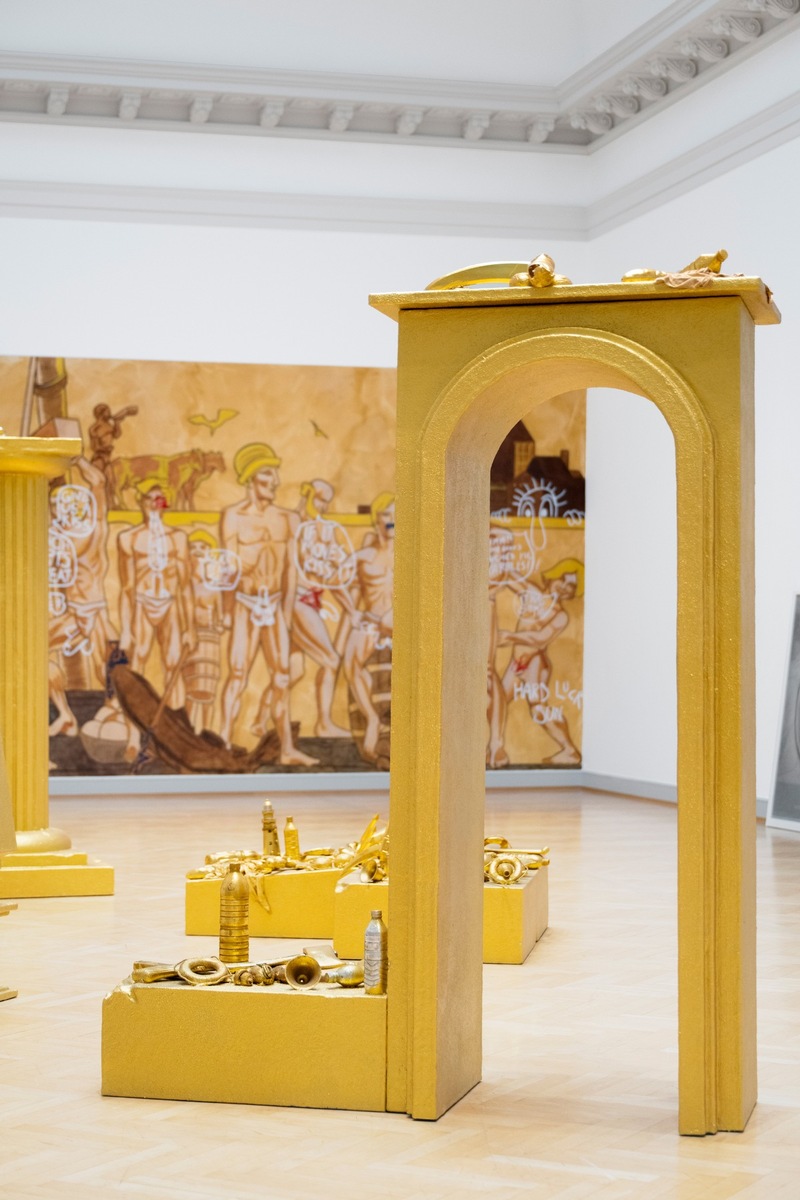
- Bild-Infos
- Download
- 4 weitere Medieninhalte
Opening: Beyond the Manosphere. Masculinities Today
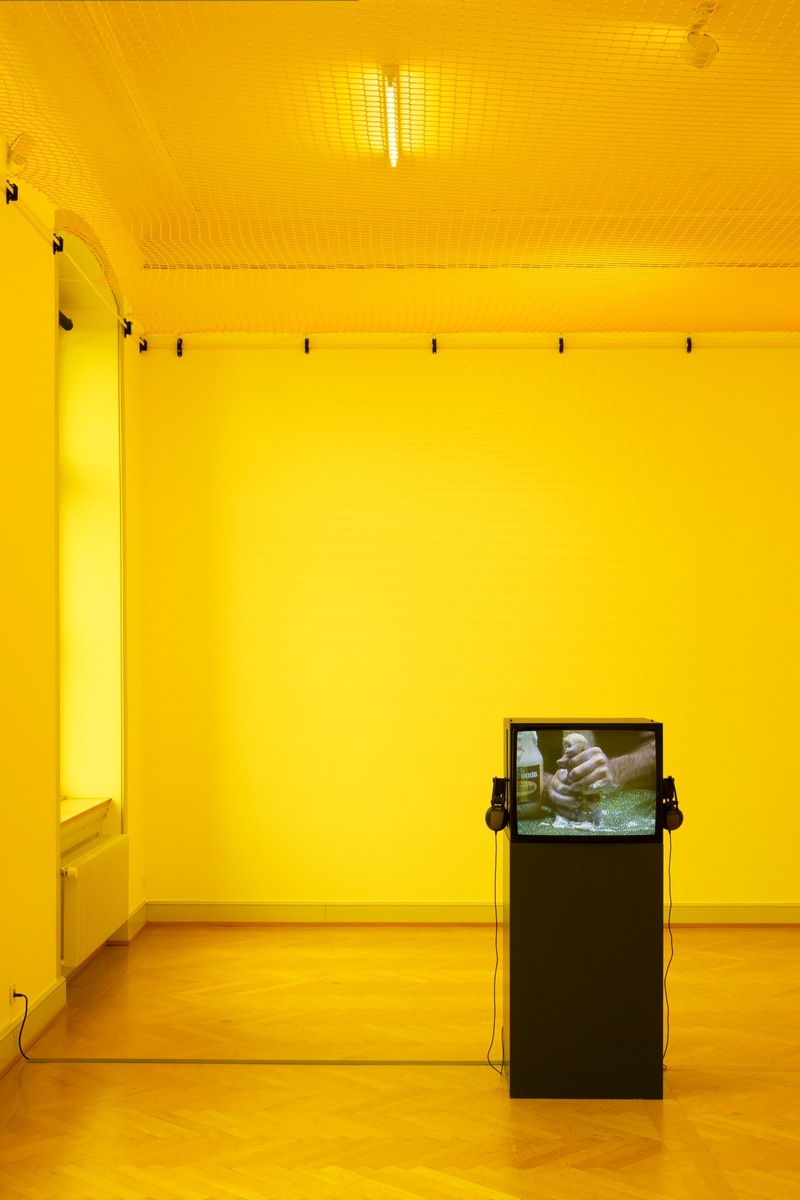
This international group exhibition unfolds in two distinct versions across two museums. Following its presentation at the Stedelijk Museum Amsterdam from April 17 to August 2, 2026, the exhibition will open at Kunstmuseum St.Gallen on October 3, 2026, where it will remain on view through January 24, 2027.
What does masculinity mean today? This question has gained renewed urgency with the rise of the “manosphere”, a loose network of online spaces where a dominant, misogynistic masculinity is asserted that, to many, feels threatening. Fuelled by the spread of Trumpism, this brand of masculinity has become increasingly mainstream.
This patriarchal, heterosexual masculinity is not new. It’s old. Patriarchy might be one of the oldest systems of all. There was a moment when the identification of masculinity with expressions of power seemed to be receding, having faced some semblance of a reckoning with #MeToo and thanks in no small part to the long struggles of various feminist movements over the last century. But as these countercurrents now appear to be losing some of their momentum, masculinity of the status-quo-affirming and domineering type has, it seems, simply “stuck around”—ready to go on maintaining a hierarchy of sex and gender in which men are up and women (and everybody else) are down. Now that it’s in the ascendant, the return of this kind of masculinity is being redefined as progress and mobilized to capitalist and fascist ends.
So, how to navigate masculinity? How can it be approached anew when it’s always already present, its meanings already taken for granted? Masculinity may at times reveal itself to be a power, something that can hurt and be hurt, something that involves a sort of prowess and can be a source of anguish and trauma, but this exhibition hopes to show that it is also more than those things. It encompasses desire, protection, comfort, and strength. As Judith Butler says in a conversation included in the publication that accompanies the exhibition: “There could be no debate on masculinity unless there were various forms of masculinity, various ways of living manhood or masculinity. It is not only that forms of masculinity have emerged in recent decades that are feminist and anti-militarist, but that gay, trans men, and butch lesbians have all delivered challenges to the very definition of manhood, often allying masculinity with progressive freedom movements and new forms of embodied life.” This is also an exhibition about how different masculinities can look and feel.
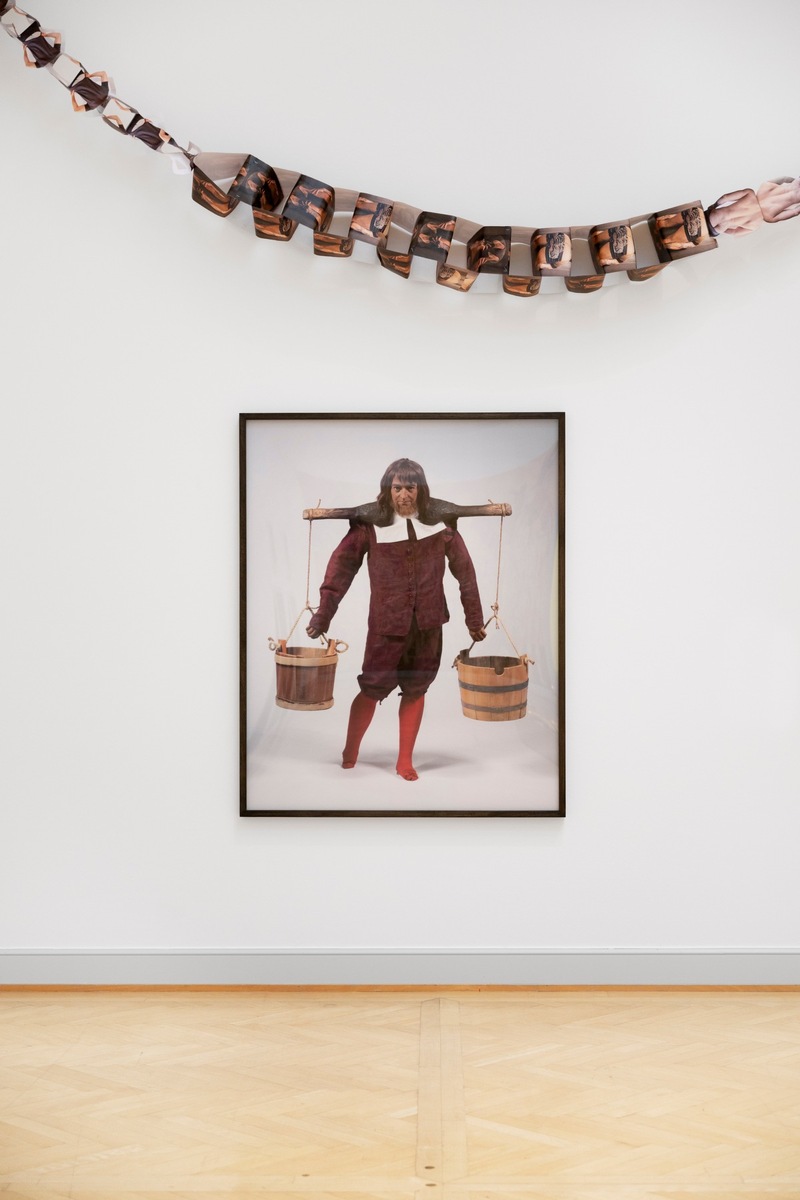
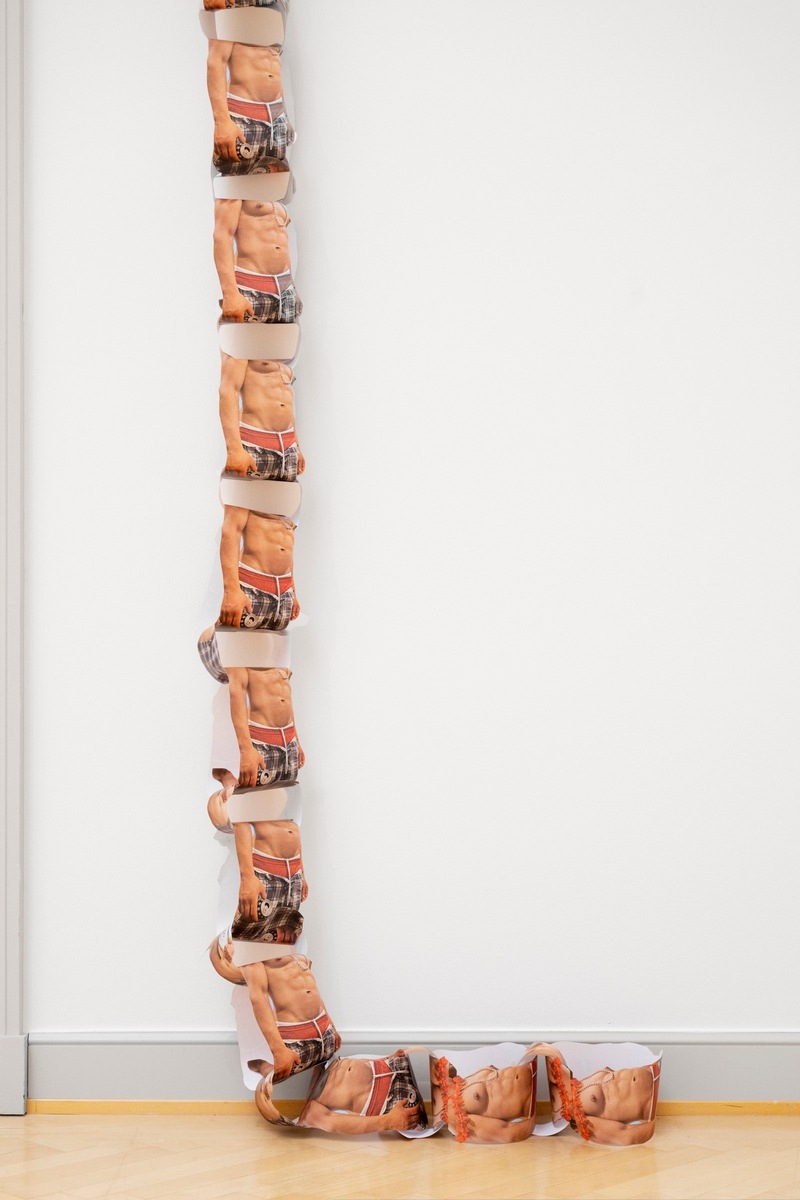
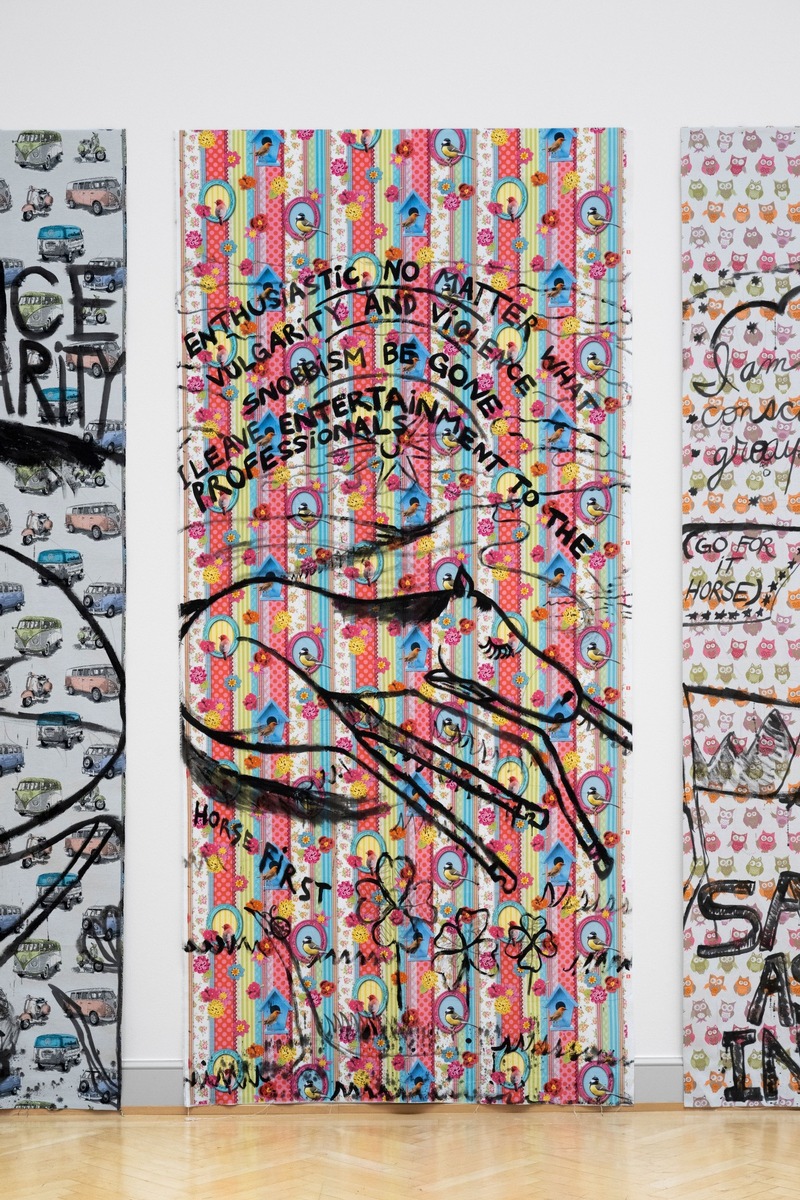
The title of the exhibition, then, was chosen not to affirm the manosphere but to break it open. The exhibition departs from the notion of the manosphere and reads it against the grain, asking: If we were to envision masculinity as a “sphere,” what would we see inside of it? What are the cultural imaginaries and realities that have shaped today’s masculinities, and what kind of space do they take up? Expanding and reimagining existing notions of masculinity, Beyond the Manosphere. Masculinities Today provides a critical perspective by bringing together artworks that speak of power, dominance, and violence but equally of their subversion and perversion. Throughout the exhibition you will encounter types, clichés, and cultural tropes—the sedimentary layers of the terrain, our received notions of masculinity, lingering, sticky, and tenacious—but you also find stories of love and desire that capture how our visions of masculinity shape the interactions we have with each other, the ways we give value and the ways we are valued. With selected works from the collections of the Stedelijk Museum Amsterdam and Kunstmuseum St.Gallen, along with loans and new commissions, the exhibition explores masculinity as an agent and performance of power but also a lived reality that is variously conflicting, banal, unsteady, and tender.
With: Arlette, Karimah Ashadu, Sophie Calle, Miguel-Ángel Cárdenas, Sam Durant, Hans Eijkelboom, EMIRHAKIN, Hamishi Farah, Sylvie Fleury, Julio Galán, Solomon Garçon, Sven Gex, Jasmine Gregory, Amanda van Hesteren, Zhana Ivanova, Mike Kelley & Paul McCarthy, Tetsumi Kudo, Basir Mahmood, Reba Maybury, Lucy McKenzie, Melle, John Miller, Marlie Mul, Sands Murray-Wassink, Eduardo Paolozzi, Paul Pfeiffer, Pope.L, Sara Sadik, P. Staff, Diamond Stingily, SoiL Thornton, Salman Toor, Alex Vivian, Bruno Zhu, and Selina Zürrer.
Curated by Melanie Bühler, Curator Contemporary Art, Stedelijk Museum Amsterdam.
The exhibition is accompanied by a catalogue published by Bierke Books and designed by Sabo Day. It includes a curatorial essay by Melanie Bühler; texts by artists such as Amanda van Hesteren, Tetsumi Kudo, Reba Maybury, Sands Murray-Wassink, and Bruno Zhu; essays by Hannah Black and Maurits de Bruijn; and an interview with Judith Butler.
____________________________________________________________
Press Contact: kommunikation@kunstmuseumsg.ch
Nadine Sakotic
Kunstmuseum St.Gallen, Head of Communications and Marketing, T +41 71 242 06 84